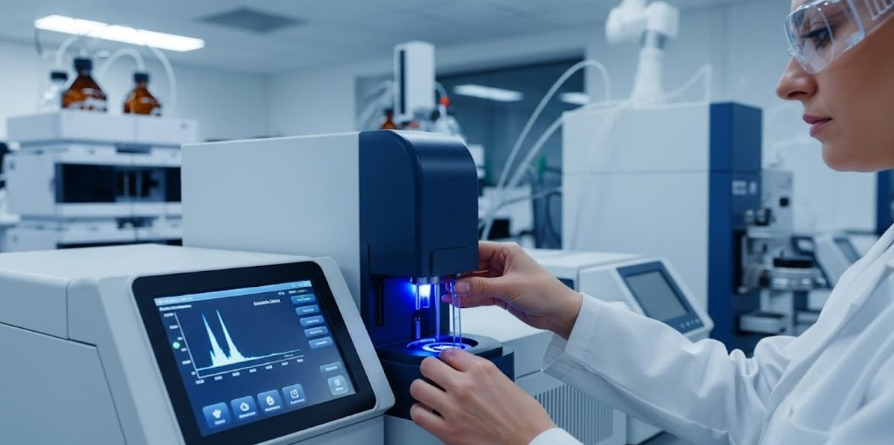
Enhancing Laboratory Accuracy with Modern Spectrophotometry

Introduction to Spectrophotometry
Spectrophotometry is a vital analytical technique used in laboratories for measuring the absorbance, transmittance, and concentration of chemical substances. It plays a crucial role in research, clinical diagnostics, pharmaceuticals, environmental testing, and quality control.
Among the variety of instruments available, the Drawell spectrophotometer stands out for its reliability, precision, and versatility. This instrument enables laboratories to perform accurate and reproducible measurements, supporting diverse analytical applications.
How a Drawell Spectrophotometer Works
A Drawell spectrophotometer operates by passing light of a specific wavelength through a sample and measuring the amount of light absorbed. This data is then used to determine the concentration and properties of the analyte. Modern models offer digital displays, programmable protocols, and integrated software for data acquisition and analysis, enhancing laboratory efficiency and precision.
The high-quality optics and detectors in a Drawell spectrophotometer allow for sensitive measurements, even with small or low-concentration samples, making it ideal for both routine and advanced laboratory applications.
Applications in Biochemistry and Molecular Biology
In molecular biology and biochemistry, a Drawell spectrophotometer is commonly used for protein quantification, nucleic acid analysis, enzyme kinetics, and molecular interaction studies. The precision of the instrument ensures reproducible results, helping researchers maintain data integrity and improve the reliability of their experiments.
The ease of use and advanced functionality make the Drawell spectrophotometer suitable for both academic research labs and industrial laboratories conducting complex biochemical analyses.
Applications in Pharmaceutical and Clinical Laboratories
Pharmaceutical and clinical laboratories benefit greatly from using a Drawell spectrophotometer It is utilized in drug formulation studies, biomarker detection, and clinical diagnostics. Accurate measurements from this instrument are critical for ensuring the safety, efficacy, and stability of pharmaceutical products.
By incorporating a Drawell spectrophotometer, laboratories can streamline workflow efficiency, reduce human error, and maintain high standards of data quality, which is essential for regulatory compliance.
See also: Transforming Sleep with Modern Technology
Environmental and Industrial Applications
Environmental and industrial laboratories use Drawell spectrophotometers for monitoring water quality, detecting contaminants, and performing chemical analysis in industrial processes. Its reliable performance and high sensitivity make it a valuable tool for both routine and complex analyses.
The instrument’s versatility allows laboratories to handle a wide range of samples efficiently, producing consistent and reproducible results across different applications.
Advantages of Using a Drawell Spectrophotometer
- High Accuracy: Provides precise measurements for a wide range of concentrations.
- Versatility: Suitable for biochemistry, pharmaceuticals, environmental testing, and industrial applications.
- User-Friendly Design: Modern interfaces and programmable protocols simplify operation.
- Reliable Data: Advanced optics and sensors ensure consistent and reproducible results.
Technological Advancements
Modern Drawell spectrophotometers include digital controls, automated sample handling, integrated data software, and programmable analysis protocols. Some models also offer temperature-controlled sample compartments for sensitive experiments.
These features enhance reproducibility, reduce operator error, and improve laboratory workflow efficiency, making the instrument a reliable investment for modern laboratories.
Best Practices for Laboratory Use
To achieve optimal performance, laboratories should follow best practices, including proper sample preparation, regular calibration, adherence to operating protocols, and routine maintenance.
These practices protect sample integrity, ensure accurate and reproducible results, and extend the lifespan of the Drawell spectrophotometer, providing long-term value for laboratories.
Conclusion
The Drawell spectrophotometer is an indispensable instrument for laboratories involved in molecular biology, pharmaceuticals, clinical diagnostics, environmental analysis, and industrial testing. Its precision, reliability, and versatility make it ideal for accurate and reproducible measurements.
Integrating a Drawell spectrophotometer into laboratory workflows enhances efficiency, supports high-quality data generation, and strengthens analytical capabilities. For modern laboratories seeking precision and performance, this instrument remains a key asset.