The Rise of SaaS Tools in Education: Balancing Efficiency with Personalized Learning

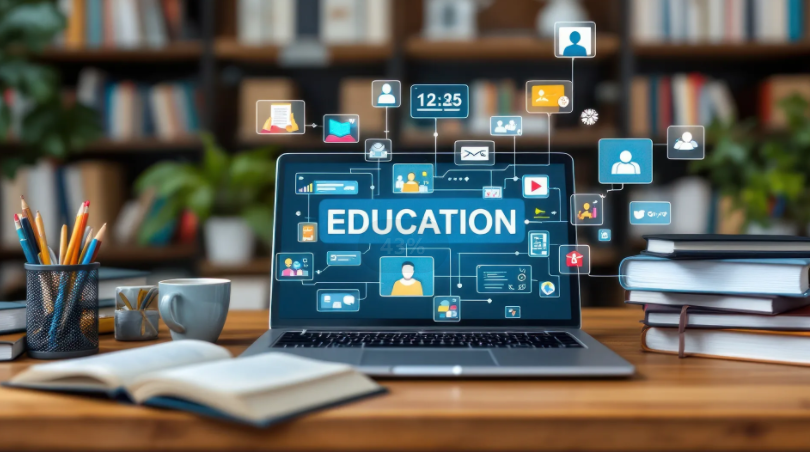
The traditional classroom, once defined by heavy textbooks and chalkboards, has undergone a radical transformation. If you walk into a university lecture hall or a high school media center today, you aren’t just seeing students taking notes; you’re seeing a complex ecosystem of cloud-based software in action. This shift is driven by SaaS—Software as a Service—and it is fundamentally changing how we teach, learn, and manage academic workloads.
As we move deeper into 2026, the question is no longer whether we should use tech in schools, but how we can use it to make learning more efficient without losing the personal connection that makes education meaningful.
The SaaS Revolution in the Modern Classroom
In the past, educational software was something you bought on a disc and installed on a single computer. It was clunky, expensive, and hard to update. Today, SaaS tools like Google Workspace for Education, Canvas, and specialized data analytics platforms live in the cloud. They are accessible from anywhere, on any device, and they update in real-time.
For the modern student, this means a massive boost in efficiency. You can start an essay on a library desktop and finish it on your phone while riding the bus. For educators, SaaS provides the ability to track student progress at a granular level. They can see exactly when a student struggles with a specific math problem or where a group project is stalling.
However, with all this efficiency comes a significant challenge: the “algorithmic” feel of education. When everything is automated, how do we ensure students are still receiving the academic assistance they need to develop critical thinking skills?
Efficiency vs. Personalization: The Great Balancing Act
The biggest selling point of SaaS in education is efficiency. Automation can handle the “busy work”—grading multiple-choice quizzes, scheduling peer reviews, and organizing digital portfolios. This frees up teachers to focus on what they do best: mentoring.
But efficiency can be a double-edged sword. If a platform is too rigid, it forces every student through the same digital funnel. True personalized learning isn’t just about a software program suggesting the “next lesson” based on a score; it’s about understanding a student’s unique voice, their struggles, and their specific goals.
This is where the human element remains irreplaceable. While a SaaS tool can flag that a student is falling behind in a literature course, it cannot sit down with that student and help them find the emotional resonance in a Shakespearean sonnet. This gap is often filled by supplemental support. Students who find themselves overwhelmed by the sheer volume of digital tasks often seek out professional essay writing services to help them understand complex structures and stylistic nuances that software simply cannot teach.
How SaaS Empowers Personalized Learning Paths
When used correctly, SaaS doesn’t replace the teacher; it acts as a force multiplier. Here is how the balance is being struck:
- Adaptive Learning Platforms: Tools like DreamBox or Khan Academy use algorithms to adjust the difficulty of tasks in real-time. If a student masters a concept quickly, the SaaS moves them forward, preventing boredom.
- Collaborative Environments: Platforms like Notion and Slack (Education edition) allow students to work in “silos” no more. They can collaborate across time zones, fostering a sense of community even in remote learning environments.
- Data-Informed Mentorship: Instead of waiting for a midterm to realize a student is struggling, teachers receive real-time alerts. This allows for “just-in-time” intervention, which is the gold standard of personalized education.
The Hurdle of “Digital Fatigue”
We have to be honest about the downsides. With a different SaaS tool for every task—one for math, one for citations, one for communication—”app fatigue” is a real concern. Students often spend more time navigating interfaces than they do engaging with the actual content of their courses.
Furthermore, the rise of AI-integrated SaaS tools has made it easier than ever to generate content, but harder to actually learn how to write. This is why many educational experts suggest a “hybrid” approach. Use the software for organization and data, but rely on human-led feedback for the creative and analytical heavy lifting.
See also: Biancolilla Olives: The Sicilian Variety Producing the UK’s Finest Extra Virgin Olive Oil
The Future: A Symbiotic Relationship
Looking toward the end of the decade, we expect to see SaaS tools become even more invisible. They will integrate into the background of the learning experience, focusing on “Hyper-Personalization.” This means the software will adapt not just to what a student knows, but how they prefer to learn—whether through video, interactive simulations, or deep-dive reading.
But even the most advanced SaaS platform cannot replace the confidence gained from working with an expert. Whether it’s a teacher in a classroom or specialized online support, the human connection is what turns information into wisdom.
Conclusion
The rise of SaaS in education is a net positive, providing unprecedented access to resources and streamlining the administrative side of learning. However, the goal should always be to use these tools to enhance the human experience, not replace it. By balancing the cold efficiency of an algorithm with the warmth of personalized instruction, we can create a learning environment that is both fast-paced and deeply meaningful.